Showing posts with label Borg Queen. Show all posts

Friday, February 7, 2025

3-10. The Last Generation.

Picard and the Enterprise save the Earth one last time.

Original Air Date: Apr. 20, 2023. Written by: Terry Matalas. Directed by: Terry Matalas.


THE PLOT:

The Borg have taken control of Starfleet!

With Jack in the Borg Queen (Alice Krige)'s clutches and acting as a transmitter, the Borg have remotely assimilated every Starfleet officer under age 25, granting them total control over all the starships assembled for Frontier Day. Earth's Spacedock is managing to hold off the assault, but Riker grimly observes that their defenses won't last long.

Seven and Raffi retake the Titan, using the ship's cloaking device to evade the Borg signal. Seven launches a series of sudden, short attacks on the assimilated starships to buy additional time. Meanwhile, Picard and his team take the reconstructed Enterprise D to the Borg Cube to confront the Queen directly. For Picard, it's a last chance to face his greatest enemy - and to rescue his son.


CHARACTERS:

Picard: It's clear that he doesn't expect to come back. The first half of the episode sees him making a series of farewells - to his old crew, to Riker specifically, and to Beverly. He not only forgives Beverly for keeping Jack's existence a secret, he acknowledges her choice in prioritizing the protection of their son: "You thought of Jack from the beginning, shielding him from danger. You did everything right." He faces his greatest fear - reassimilation by the Borg - in order to connect with his son. But first he directly gives Riker command of the mission: "I can no longer be your captain. I now have to be a father."

Riker: He is instantly nervous when they beam to the Borg Cube and discover no drones waiting for them. He observes that in all his years, he never had a "too quiet" moment that turned out well. As a father himself, he understands Picard's priorities completely. When the Enterprise tells him that time is growing short and that the ship will have to take action, Riker refuses to beam out without Picard, even knowing that this decision might mean his death.

Worf: "There was a moment today where I was worried we might actually survive." Worf has been awesome all season, and that carries through to the finale. He doesn't hesitate to join Picard and Riker in beaming to the Cube, even though he seems fatalistically resigned to their likely fate. He also acknowledges his friendship with Raffi with a particularly well-judged gift.

Data: Admits that he is having some trouble adjusting to having full emotions. Not, thankfully, in the manner of Star Trek: Generations' annoying "emotion chip" subplot, but rather in the way ordinary people sometimes struggle with strong emotions: an image that evokes nostalgia, such as a crew member petting a cat, or a strong feeling of hatred for the Borg over the misery they cause. This is generally well written, getting just enough attention to convince as part of Data's journey without being allowed to distract from the main plot.

Seven of Nine: The script wisely focuses on the TNG crew, splitting Seven and Raffi off in their own subplot on the Titan. Seven improvises like mad to disrupt the Borg plan as much as she can with the limited resources available. She is left with a very small crew that includes a nervous cook with some past piloting experience. She deals well with this, encouraging the man without coddling him. The implications of a modification she and Raffi make to their phasers is something that I'd love to see future Trek projects address, by the way.

Jack Crusher: It's made clear why his capture was so essential to the villains, as the Borg need him to transmit their assimilation signal. This does mostly make him more a plot device than a character in this episode: the mechanism of the Borg plan and the object of Picard's attempted rescue. Still, he gets a decent character moment within the Collective, where he finds the sense of belonging that's always eluded him - which is what Picard has to argue and urge against when he connects with him near the end.

Others: This season has a large ensemble, and it's inevitable that some characters will be moved to the background. To writer Terry Matalas's credit, every regular gets at least one moment. Geordi is left in command of the Enterprise, and he trusts Data with a near-impossible task. Dr. Crusher shows remarkable competence at tactical, surprising the others; as she explains, she hasn't exactly been idle over the last twenty years, which have involved a lot of running from various adversaries. Deanna's strong connection to Riker plays a critical role at the end. Meanwhile, on the Titan, Raffi provides unwavering support to Seven - though her best character scene comes opposite Worf. None of them are the focus of the episode, but they all get a moment or two to shine.


THOUGHTS:

Season Three of Picard has revolved, in large part, around themes of family and connection. The Last Generation does an excellent job of folding these into both the story and its resolution. Picard and Jack have awkwardly attempted to connect as father and son all season. By contrast, Jack's assimilation by the Borg sees him feeling an instant and effortless connection, one that Picard attempts to persuade him is illusory.

The Borg Queen describes the Cube as Picard's "true family." Picard reaches Jack through sacrifice: surrendering his command to "be a father" and facing his greatest fear in order to reach him. Deanna's link to Riker (her family) plays a major role in the climax. Even the epilogue carries the theme through, from Raffi's reconciliation with her son to the final scene of the old TNG crew sitting down for a hand of poker as the credits roll.

While I find myself somewhat missing the standalone storytelling of older Trek series, a well-paced season arc offers a big advantage: If previous episodes have done their jobs properly, the finale can hit the ground running. Previous episodes of this season established the overall relationships, as well as the situation and the stakes. That leaves this episode free to zip right into the action. The threads are quickly established: Seven on the Titan, trying to delay the Borg attack; Picard, Riker, and Worf on the Borg Cube; and the Enterprise crew. The episode moves quickly, with plenty of action and incident, but it never feels rushed or overstuffed. As a result, in addition to thematic unity, The Last Generation benefits from being extremely enjoyable to watch.

Complaints are relatively minor. The Seven/Raffi strand feels a bit disconnected from the rest of the episode; it would not be difficult to rewrite this script to remove them entirely. The worry I expressed in the previous review, that the Borg would render the previous changeling threat into an afterthought, ends up being fully realized. Exposition tells us that the changelings were important to the Borg plan. Still, after previous episodes made the changeling infiltration all encompassing, leaving Picard and his crew with nowhere to turn for help, in this episode the changelings are suddenly unmentioned and irrelevant. I could charitably posit that, after the failure of the plan, the infiltrators decided to pull out and wait for another opportunity... but it does feel as if the changelings went from practically omnipotent in previous episodes to borderline irrelevant at the end.


OVERALL:

Despite my gripe about the treatment of the changelings, this was an overall excellent finale. It uses themes established throughout the season in a way that connects both to the overall threat and to the characters. It finds important things for every character to do. It also moves fast and is highly enjoayble to watch.

I'll put more thoughts together about the season as a whole for my season overview. Ultimately, though, Picard's best season ends on a strong note. It's not quite the season's best episode - but it's a good episode, and a worthy finale.


Overall Rating: 8/10.

Previous Episode: Võx

Season Three Overview

Review Index

To receive new review updates, follow me:

On BlueSky:

On Threads:

Friday, January 31, 2025

3-09. Võx.

An old enemy lies behind the mysterious red door in Jack's subconscious...

Original Air Date: Apr. 13, 2023. Written by: Sean Tretta, Kiley Rossetter. Directed by: Terry Matalas.


THE PLOT:

With the Frontier Day celebration about to begin, and still with little idea what the changelings are planning or why they are pursuing Jack, Deanna uses her abilities to try to guide the young man into opening the red door that lies in his subconscious. She is able to prod Jack into opening the door - and is shocked to discover the Borg waiting on the other side!

When the Borg assimilated Picard and turned him into Locutus, they also rewrote his DNA. This is the source of Jack's abilities. He is a Borg "transmitter," able to seize control of assimilated or partially assimilated Borg. Jack responds to the news by fleeing, stealing a shuttle and taking off for an unknown area of space.

Picard does not have the luxury of following. If Jack's abilities were Borg, then how was he able to take control of members of the Titan crew? The answer lies in the theft of Picard's original remains from Daystrom - and in the transporters the changelings have been using throughout Starfleet.

Picard and his crew rush back toward Earth. It may already be too late to stop a disaster, however. Thanks to the changeling infiltrators, the Borg assimilation of Starfleet has already begun - without anyone even noticing it...


CHARACTERS:

Picard: "It's my responsibility. I'm the cause. It's my fault." Picard already felt guilt at Jack inheriting his Irumodic Syndrome, which is only worsened when he discovers that what Jack inherited was actually a link to the Borg Collective. The scars of his own assimilation affect his attempt to talk to Jack. His usual compassion is blunted by his memories of being forced to do the Borg's bidding. He prioritizes the need for precautions over clear explanations, which only pushes Jack to flee that much faster than he otherwise might have.

Deanna: The instant she sees the Borg in Jack's mind, she leaves, locking him in sickbay as she runs to tell the others what she's found. This is the right thing to do; for all she knows, telling Jack might activate some dormant program. However, it also makes a lie out of her promise that whatever's behind that red door, he won't be left to face it alone - adding an extra dollop of betrayal onto the young man's fear.

Jack Crusher: It's hardly surprising Jack is thrown into turmoil. Within a short time frame, he's had his existence turned upside down: he's been hunted, he's been told that he has Irumodic Syndrome, he's discovered that he has impossible abilities, he's had Vadic dangle the prospect of answers in front of him, and now he learns that he's a product of the Borg's assimilation of his father. There's basically been no rest for him to come to terms with anything. The action that he settles on is rash and ill-advised... but given his week, I'd have been surprised if he had been in a fit state to stop, think, and listen at this point.

Capt. Shaw: After realizing the Borg connection, Picard orders the ship to Earth. This prompts Shaw, in his role as the Designated Realist, to point out that everyone who is hunting them will be there. But when Picard tells him that this is their only option, he no longer argues. Instead, he lets out a resigned sigh - "Of course it is." - and gives the order. Over the course of the season, he's gone from an adversary to a proper member of Picard's crew, albeit one who doesn't hesitate to point out uncomfortable realities. He also is once again paired with Seven, finally showing her the respect of calling her the name she identifies with.


FAN SERVICE, IN THE BEST WAY:

One area in which I've generally been impressed by Star Trek: Picard is in its careful balance of fan service against being its own show. From the beginning, Picard has done a fine job of using nostalgia just enough to enhance without allowing it to overwhelm the story. There have certainly been occasions that I've found the stories themselves a bit lacking (Season Two), but the use of past elements has largely shown restraint and careful judgment.

I think that might be one reason why the final ten minutes of this episode works so well. For the first time, in the closing Act of its penultimate episode, Picard leans fully into fanservice. I watched Encounter at Farpoint back in 1987. I was one of the kids in the schoolyard dismissing TNG as "fake Star Trek" and "diet Star Trek," and I watched as it slowly transformed into a cultural touchstone in its own right. I have a hard time believing that too many fans of my generation weren't at least somewhat moved by this episode's closing minutes.

Yes, it's blatant fanservice. But as a fan, I felt well-served - and I think it lands just right because the series has been cautious in its reliance on fanservice elements up to this point. In short, by the time Picard finally goes full fanservice, it's earned the privilege.


OTHER MUSINGS:

"So how much of me is me?"
-Jack Crusher asks the season's key question. As of yet, it goes unanswered.

Questions of identity and inheritance have pervaded the season. Picard, Jack, and Beverly have all grappled with what traits Jack inherited. Picard keeps defaulting to seeing his worst traits in Jack: his stubbornness, his willfulness, more than a hint of his youthful arrogance. But Jack has also displayed courage, quick thinking, and even selflessness on multiple occasions - which is to say, some of Picard's best characteristics.

Throughout the season, the characters have talked about Jack almost as an extension of Picard, though. Riker marvels at the similarities he sees between them. Picard worries about the traits he's left the young man. Jack has worried about the same, from the Irumodic Syndrome to this episode's revelation of inherited Borg influence. At every turn, the characters seem to ignore what Geordi and Sidney acknowledged about each other back in The Bounty - that whatever was passed on, Jack, like Sidney, is also his own person.

Jack ends this episode by coming face to face with the Borg Queen (Alice Krige), who also sees him not as himself but rather as an extension of her will. I am hoping that the finale will actually come back to the thread of Jack's own identity, however, to answer the question quoted above: Beyond what he inherited from Picard, from Dr. Crusher, from the Borg, who is he? Given how much of the season has circled around that question, I'll feel a bit churlish if Jack as himself isn't important.

Beyond that, Võx is a solid episode. This is another installment that's mostly there to put the characters in place for the finale, so I suspect more detailed thoughts will wait until the finale. I will say that the nature of the Borg assimilation is rather clever. The mechanism is unique, but it also makes sense given the way the Borg have previously been shown to work.


OVERALL:

I have a few worries about the Borg revelation. Picard has spent the entire season building up the threat of a changeling infiltration. The bait and switch with the Borg has the potential to be interesting... but it also runs the risk of making the changelings, up until now the season's villains, into irrelevance.

I will hope that the finale manages to pull all the threads together.


Overall Rating: 7/10.

Previous Episode: Surrender
Next Episode: The Last Generation

Review Index

To receive new review updates, follow me:

On BlueSky:

On Threads:

Friday, February 23, 2024

Thoughts on Season Two.

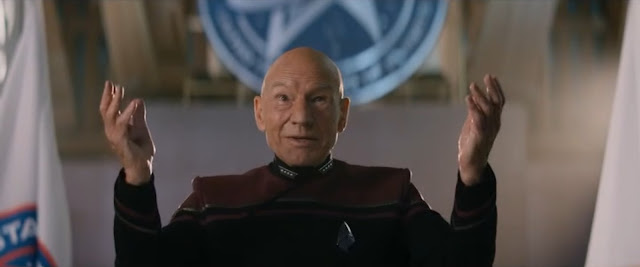
Picard gives a speech about second chances.

THOUGHTS ON SEASON TWO:

Fair warning: This is a look at the season as a whole. If you haven't seen Season Two yet, know that there are spoilers throughout!

I mostly liked Season One of Picard, which felt like a legitimate attempt to do what good science fiction has always done: Used the idea of the future to reflect on the present. The show opened with Picard disillusioned and resigned to a world moving in the wrong direction, with the story gradually bringing him back to his old self over the course of the season.

There were certainly flaws. Not all the characters were well used, and the general idea of a Starfleet suffering from moral decay seemed to vanish midway through. Even if I didn't like every creative choice (such as Picard's synthetic body), I still enjoyed the story and at the very least respected the ambition.

I found Season Two to be more of a mixed bag. It fixes many of the first season's problems, but it replaces them with all new missteps. I found most of it to be entertaining, and even the worst episode remains watchable... but I didn't find the story to be as interesting. In the end, I was left feeling underwhelmed.

But before I explore the reasons for my disappointment, let me start with what the season did well...
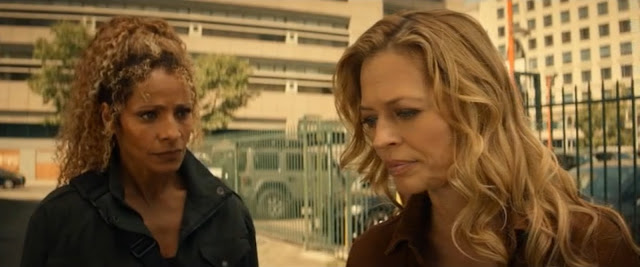
Seven and Raffi struggle to reconnect
amidst an ocean of personal issues.
Seven and Raffi struggle to reconnect amidst an ocean of personal issues.

FORWARD PROGRESS - CHARACTERS:

The cast is much better used in Season Two than in Season One. Every member of the ensemble gets at least a few moments in the spotlight, and the scripts allow them some enjoyable and well-written interactions.

Now, this is likely helped by the early episodes culling a couple of "extra" characters. Soji, the central character of Season One's story, is seen in the first episode just long enough to establish that she's on a diplomatic mission and won't be joining the rest of the characters. Elnor is present for the first stage of the mission, but he gets killed in Episode Three.

I think this was a good choice. Had both characters been retained, they would have just been additional crew members in need of things to do. Removing them makes it more viable to give quality material to the other regulars. Elnor's death also fuels Raffi's character arc, while Isa Briones gets a decent supporting role through the magic of time travel doppelgangers.

I complained about the Season One finale just establishing Raffi and Seven as a couple without having ever shown any interaction between them. Season Two takes this clumsily created relationship and makes it work. Having missed the chance to show their initial connection, the writers do the next best thing. They start the season with them estranged, broken up by the multitude of personal issues each of them has. Then the rest of the season sells them as a couple by showing them overcoming those barriers. It even ties in with the season's theme of revisiting the past. As Picard observes in a graduation speech early on, second chances are rare. Seven and Raffi get one, because although their relationship already failed, their feelings for each other remain.

Finally, there's Agnes Jurati. Despite second name billing and a role in the story that should have made her central, Season One often shunted Alison Pill's neurotic scientist to the periphery. She gets a much stronger role in Season Two. Like Seven and Raffi, her relationship with Rios has failed between seasons, but she is not looking to reconnect. She's alone - and despite an apparent yearning for connection, she seems determined to stay that way.

This not only makes her vulnerable to the Borg Queen's manipulations, it also allows the scripts to thematically parallel her with the Borg. Many of the season's best moments come from this: the connection with the Borg Queen in Assimilation, Jurati's attempts to co-exist with the Queen in Two of One, and her appeal to the Queen in Hide and Seek. Alison Pill is excellent throughout, and she plays particularly well opposite Annie Wersching's Borg Queen.

There's really only one character whose arc didn't work for me in Season Two. Unfortunately, it's kind of a big one...
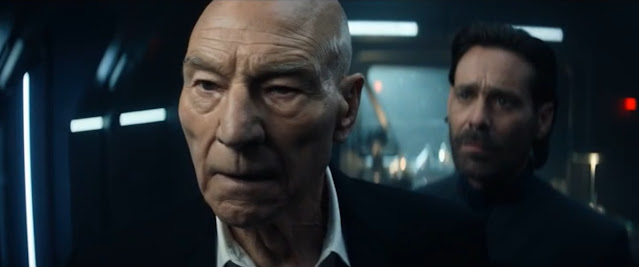
Picard struggles to learn lessons he already learned before.

PICARD'S JOURNEY:

I see what the writers were attempting with Picard. Q takes him and his crew into the past to save the future, while at the same time Picard is forced to confront his own past to overcome emotional issues interfering with his happiness in the present. On paper, it sounds fine, even clever.

Other opinions are certainly available, but I didn't think the execution of it worked at all.

One problem for me is that much of the material regarding Picard's past has no real connection, either in terms of plot or theme, to the external threat he's dealing with. Only Hide and Seek manages to overcome this problem, thanks to Picard using the tunnels from his childhood against the villains. Monsters, on the other hand, resorts to dream sequences/flashbacks that feel thinly motivated at best.

The other problem is that those are the only two episodes that significantly address his past and his need to confront it. This is the basis of his arc, and yet aside from these two episodes it is only occasionally even mentioned. It's hardly surprising that, in a ten-episode season, an arc that's ignored for full episodes at a time doesn't get a chance to properly build.

My final complaint might also be my biggest issue: TNG already trod a lot of this ground, and frankly in better episodes. Picard's strained relationship with his family was at the core of Season Four's Family. There, he (somewhat) mended his relationship with his brother. Here, he comes to realize that his late father wasn't the stern monster of his memory but was actually dealing with considerable emotional pain himself. It's a worthy enough lesson... but I can't escape feeling like we've done this already!

The other lesson Picard must learn is that, however badly he may wish to, he cannot change the most painful moments of his past. Even if he could change them, the results would probably not be to his liking. Again, he's already had this realization - thanks to Q, no less! - in Tapestry. Now, it's fair enough to echo past episodes. Given how much Star Trek was cranked out in the 1990s, some echoes are inevitable. But if you're going to retread old ground, maybe don't make it some of the old series' very best episodes?

For the record, none of this keeps Picard from working as a character the bulk of the time. When the scripts aren't laboring to make him (re-)learn a Very Important Lesson, both Picard and actor Patrick Stewart are a joy to watch. I loved his protectiveness of Jurati, or his wonderfully scripted pep talk to  Renée at the gala. The character was at his best in these scenes, or when ultimately choosing to deal honestly and compassionately with the FBI agent holding him and Guinan prisoner. At the end of Hide and Seek, I almost got chills from his vow not to accept a bad outcome before it happens.

So yes, the character still works splendidly when Picard is simply being Picard: literate, obstinate in ways sometimes good and sometimes not, compassionate, and with the ability to turn hopeless situations to his advantage. Problems only sneak in when the writers try to force him into an arc that fails to convince.
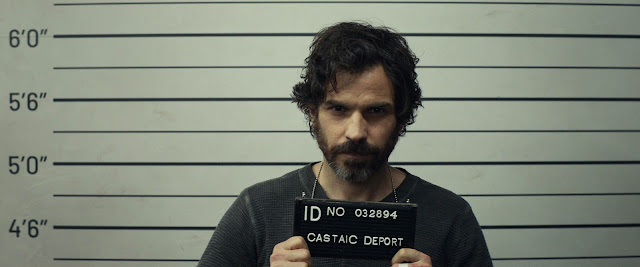
Rios gets arrested by ICE. I'm glad the show has time for this, and that the actual plot won't get badly rushed later on...
Rios gets arrested by ICE. I'm glad the show has time for this,
and that the actual plot won't get badly rushed later on...

A PROBLEM OF PACING:

Season Two opens extremely well. The first three episodes are quite good, and they set up almost everything that the rest of the season will follow.

The opening episode efficiently shows how the characters have progressed since Season One. The bulk of the episode establishes character arcs and relationships. Then, at the end, Picard encounters a crisis involving the Borg, culminating in the sudden intervention of Q. Episode Two expands on Q's role, as he angrily declares that this not a test or lesson, but rather a "penance" for Picard. The rest of the episode follows the character in a dystopian alternate reality. By the end of the episode, we know that this reality is the result of a single change Q made to the timeline in the year 2024. Episode Three brings the characters to their past/our present and starts the main plot moving, while at the same time establishing Rios's relationship with Teresa and drawing parallels between Jurati and the Borg Queen.

The alternate future is a bit of a generic "evil future"; that aside, this opening Act is pretty close to impeccable.

Too bad that the midseason is the opposite of that.

The middle four episodes do an awful lot of water treading. Watcher, my pick for the season's weakest episode, devotes half its running time to pointless side trips. Rios has an extended misadventure with ICE while Seven and Raffi steal a police car and essentially play real life Grand Theft Auto to try to rescue him. None of this even particularly goes anywhere; once Episode Five rolls around, Seven and Raffi rescue Rios with all the effort of pressing a button, and the whole incident receives only a single mention later. A mention that makes Rios look like an imbecile, at that... though the overall treatment of Rios this year makes me wonder if he hit his head really, really hard between seasons.

The final three episodes pick up the pace again. Episodes 8 and 9 see a welcome return to the high quality of the early episodes, and Episode 10 ends by bringing the story full circle with some excellent character epilogues.

Unfortunately, those character epilogues come after some final plot mechanics that are badly rushed. Episode 10, Farewell, opens with Picard and Tallinn trying to stop the villainous Dr. Soong from interfering in the launch of a very important space mission. This should be tense and exciting, with Picard and Tallinn relying on their wits to evade security to beat Soong to the goal while the not-so-good doctor just as desperately tries to bluff his way through using his credentials and attitude. Because it's all crammed into about twenty minutes, though, neither heroes nor villains experience any obstacles. This should be a highly secure area in the midst of enormous activity, and yet we barely even see any evidence of basic staff. Meaning, yes, the pre-launch party was locked down like Fort Knox while the launch itself has less security than a 7/11!

Ideally, this should have been the focus of one full episode, with the character epilogues and resolution of the initial Borg contact left to be an episode in itself. But I guess we really needed that big car chase and that episode about bad dreams, even if it left the actual season climax feeling like a tacked-on afterthought.
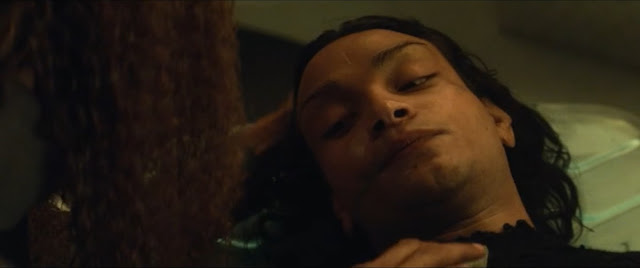
Elnor dies. But don't worry - He gets better.

CONSEQUENCES ARE FOR REDSHIRTS:

Something unexpected happens in Episode Three: Elnor dies. This sends Raffi into a season-long spiral of guilt and anger, with her clinging to the gossamer-thin hope that if they fix the timeline he'll somehow be brought back to life.

I really hoped that the death would stick. Not because I don't like Elnor; I've actually liked the character since his introduction. However, I am a believer that, with only the rarest exceptions, dead characters should stay dead. In my review, I observed that Elnor's death was a vastly more effective unheroic "pointless death" than Tasha Yar's in TNG, and I appreciated the way it was used to kick off Raffi's character arc. I even liked the ways Elnor was used in the later season, with a flashback in Episode Eight and a hologram in Episode Nine developing Raffi's guilt and, finally, resolving it as much as such issues can be.

Then Q brings him back to life in the finale, because why should there be any lasting consequences? I'm reminded of Q Who?, another story in which Q whisked Picard's crew away from familiar surroundings and put them in danger, as the Enterprise experienced its first contact with the Borg. Eighteen crew members died. When an outraged Picard confronted him about that, Q responded perfectly:

"It's not safe out here. It's wondrous, with treasures to satiate desires both subtle and gross - but it's not for the timid."

But it turns out that Mr. Magic will resurrect the dead - provided they are people close to Picard and provided Q is in a sufficiently sentimental mood. So Elnor gets to live! But it sucks to be one of those eighteen redshirts.

The hilarious thing? I'm pretty sure Elnor isn't in Season Three, so there wasn't even a contractual reason to do this. With regard to the larger series, the resurrection appears certain to end up being less than pointless. And had the group been remembering Elnor in that final scene with Guinan, I think it would have been considerably more effective.
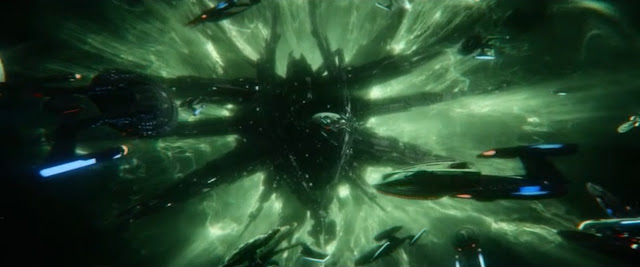
Starfleet faces a threat that isn't exactly as it seems...

SEASON THREE WISHLIST:

As was true when I made up my "Season Two Wishlist," I'm not going to pretend not to know what was in every single promo for Season Three. I already know that Season Three is, to all intents and purposes, TNG Season Eight.

This is not my preference. One aspect of Picard I've consistently appreciated is that it's balanced nostalgia against being its own series with its own set of regulars. I would have preferred that the series continued doing that. Yes, I enjoy guest appearances by members of the old cast where appropriate - but I would have liked them to remain guest appearances.

Still, the producers made their choice, and overall reception to Season Three indicates that it was the correct one for a lot of fans. Knowing that, my main hope is that the characters are properly utilized. Let's not repeat the mistake of Enterprise's These Are the Voyages, please, in which years had passed but all the characters were still exactly the same. It's been a long time. I hope the show acknowledges that by showing that the characters have moved on in various ways in the interim.

I also hope that the background set up by Picard's first two seasons is not forgotten. Synthetics are now a part of the Federation, though that has come after more than a decade of their mere existence being outlawed. This is an issue that deserves some follow-up. Picard has a synthetic body, which received only a couple of references during Season Two. I don't expect any meaningful follow-up, but I consider the lack of follow-up to have been a missed opportunity. There have been references to a mysterious threat in both seasons, and that absolutely should be addressed.

But my biggest hope is just that Season Three is good. Season One had plenty of flaws, but I liked it overall. I found Season Two to be a bit disappointing, but I still enjoyed more of the episodes than not. In all likelihood, Season Three will be the last time we ever see all of these characters together again, much as was true of Star Trek VI and the TOS cast. As such, I hope it follows in Star Trek VI's footsteps by delivering a final adventure that's worthy of them.

If nothing else, it's almost certainly going to be better than Nemesis. And I say that as someone who mostly liked Nemesis on its own terms.
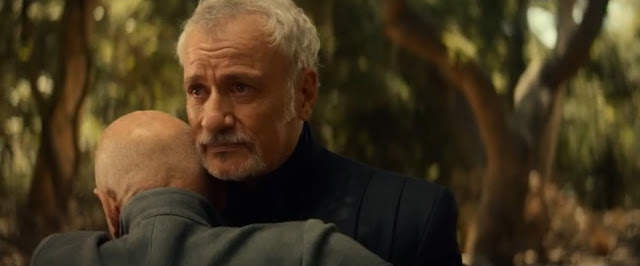
Q and Picard say farewell.

IN CONCLUSION:

"Potential" was my keyword for Season One of Star Trek: Picard. The season was swimming in interesting ideas, intriguing elements, and enjoyable characters. It didn't always use them as well as I'd have liked, but it was clear that there was the foundation for a legitimately interesting series that went beyond just "TNG nostalgia."

Unfortunately, my keyword for Season Two is "disappointment." I don't think Season Two is bad in the way its worst detractors insist. There are several good episodes and a few very good ones, and even the weakest entries remain watchable (something that wasn't always true of TNG). But the whole ended up feeling like less than the sum of its parts, and I came away feeling... honestly a little discouraged by it.

I'm hopeful that Season Three will stick the landing, and will manage to do so in a way that fits Star Trek: Picard and not just Star Trek: The Next Generation - Reunion. But I have to admit that, even though I enjoyed it well enough on an episode-by-episode basis, Season Two has left me feeling just a bit hollow.


Previous Season: Season One
Next Season: Season Three

Review Index

To receive new review updates, follow me:

On BlueSky:

On Threads:

Saturday, February 3, 2024

2-09. Hide and Seek.

The Borg-possessed Jurati and her drones come for La Sirena!

Original Air Date: Apr. 28, 2022. Written by: Matt Okumura, Chris Derrick. Directed by: Michael Weaver.


THE PLOT:

Time has run out. The Borg Queen-possessed Jurati has taken control of La Sirena's transporters and has beamed herself and her Borg-possessed soldiers to the ship. Her intent is to take the ship, destroy the Europa from orbit to prevent the Federation from forming, and then get a 400-year head start on forming a Borg Empire capable of either wiping out or assimilating the fascist Confederation and anyone else who tries to get in her way.

Rios, Teresa, and Teresa's young son barely manage to escape the ship, even as Picard and the rest of his crew beam to the abandoned Chateau Picard. The primitive Borg drones, under the command of Adam Soong, have no intention of allowing Picard anywhere near the ship.

Rios is injured, so he is beamed to Tallinn's apartment with Teresa and her son. Seven and Raffi attempt to approach La Sirena from the side, hoping to avoid the bulk of the drones. It falls to Picard and Tallinn to draw Soong and his forces into the Chateau, where Picard uses the tunnels underneath to play a particularly deadly game of hide and seek...


CHARACTERS:

Picard: "I refuse to accept an outcome that has not yet occurred." Picard draws on his childhood memories of the tunnels under the Chateau to evade Soong's forces. He tries to persuade Soong that the future the Borg Queen has promised him is a horrible one, but he isn't at all surprised when the other man is unmoved.

Jurati: Even if she did a horrible job of guarding the Borg Queen, she at least had the presence of mind to take precautions against the Queen's desire to take the ship. She locked out systems with a security code that she took care not to memorize, transforming La Sirena into "the world's biggest paperweight." She challenges the Borg Queen about her own loneliness and points out that in every timeline, the Borg end up failing.

Seven: A few snatches of her post-Voyager life get filled in. She attempted to enter Starfleet after the ship returned to Earth, only to be rejected for being Borg. Janeway threatened to resign in protest, but Seven chose to withdraw her application and join the Rangers instead. It's unspoken, but she wasn't willing to see Janeway throw away her career on her account. She refuses to allow any illusions about their situation. The enemy soldiers are no longer human; they are Borg. When Raffi starts talking about what they will do after this crisis, she flatly states, "We're not getting out of this."

Capt. Rios: He's been sidelined for pretty much the whole season... and it happens again after he gets injured during the initial attack. Picard beams him to Tallinn's apartment, then locks him out of the transporter so that he can't come back. Rios spends the bulk of the episode trying to break into the system to get back to help. Both Picard and Teresa are right, of course; if he beamed back right at that moment, he would only succeed in getting himself killed. But his stubbornness does pay off at the end.

Elnor: One of Jurati's safeguards was to program an emergency security hologram with the likeness of Elnor. The hologram also seems to have both his personality and memories. He grins when picking up Elnor's old sword to fight the Borg drones, then does his best to console Raffi about Elnor's feelings for her.

Tallinn: Remember the tough, wary Watcher who trained a gun on Picard and told him that she didn't like time travelers? Or the uneasy ally who needled him about Laris? Well, now she's his unapologetic sidekick, tagging along after him like a lost puppy. Or possibly his roaming therapist, given how much time she devotes to trying to get him to reconcile with his childhood... while men with guns are chasing them. Even Troi would have more common sense. (Or, recalling some of Troi's TNG lowlights, possibly not). All told, it's a rather sad decline for an initially fun and interesting character.

Teresa: Is awed at Rios having what amounts to a full emergency room inside his pocket, and confronts him with the effect this has on her: "You have no idea what this is like for me, do you? ...Surrounded by miracles, knowing win or lose, I'll have to let them go?" This does not stop her from bluntly pointing out that the injured Rios is currently not in shape to help anyone. The Rios/Teresa scenes work much better in this episode than last time. I think the writers should have saved their first kiss for here, where the situation makes it feel more natural and less shoehorned-in.

Adam Soong: He was introduced proclaiming, "Imagine, if you will, I am a god." Here, he declares himself to be a captain of industry. He's neither. He's gone from being Q's lackey to being the Borg Queen's; from having the love of a daughter to being alone; and he's so self-absorbed that he's incapable of seeing that his obsession with legacy has all but guaranteed that he won't have one. Brent Spiner is very good, as he has been all season. It's notable that the same actor who made Data so beloved can create a villain so despicable and ultimately pathetic.


THE PICARD SLEDGEHAMMERS:

It might be more accurate to label this one the Jurati and Tallinn sledgehammers. Picard gets a speech, of course, talking about moments in time we wish we could return to - but it's actually fairly effective on its own. Too bad it's flanked by two that are much worse.

Jurati lectures the Borg Queen about embracing uniqueness and even apparent weakness; Tallinn earnestly talks to Picard about how love can be a source of grief, but it's always "a gift." Both of these feel ridiculously heavy handed, and coming so rapidly one after another, the speechifying destroys the momentum in the final Act.

I think this was entirely fixable. Tallinn's should have been dropped entirely, as Patrick Stewart and Orla Brady are more than capable of conveying Picard's acceptance of his past nonverbally. I also think Jurati's attempts to alternately needle and persuade the Borg Queen would have played more convincingly in small interactions spread across the full episode, rather than being compressed into a single monologue.

As it stands, though, the succession of speeches kills the momentum of the final Act - which is a shame, as the episode is generally gripping up to that point.


OF MONSTERS, MEN, AND FLASHBACKS:

Most of the flashbacks of this episode simply re-tell the "young Picard" story that had been told in Monsters, only minus the fairy tale nonsense. Hide and Seek tells it better, not least because this time the flashbacks are actually motivated by the present-day story, as Picard goes through the same tunnels he once went through with his mother.

Nearly all the information given in Monsters is repeated here, only with additional context and an ending. If you missed Monsters entirely, nothing in the flashback plot here would seem at all confusing. This episode, in itself, gives you all the information you need to follow along.

Meaning that, yes, one of the season's weakest episodes was also pure water treading.


OTHER MUSINGS:

For the most part, I quite enjoyed Hide and Seek. Director Michael Weaver does a fine job at keeping the pace moving and the action easily understandable. The script finds time for good character moments for multiple members of the cast - not only Picard, but also Seven, Raffi, and even Rios. The Elnor hologram even allows him to receive some decent material, six full episodes after his death.

As was true of Mercy, this episode builds some honest-to-goodness momentum, and it manages to maintain it even during the flashbacks. Yes, when Tallinn and Picard pause in the tunnels to have a chat, I can't help but snap: "Is this really the best time?" - but it doesn't lose the tension, particularly with Soong finding the secret passage soon after.

The episode ends with a strong final note. It's not quite a cliffhanger. "The Siege of Chateau Picard" is fully resolved here, and the characters aren't in any immediate jeopardy at the end. Instead, we end on the heroes fully resolved in their next course of action, which I think is a lot more effective than, say, having someone pop up and train a gun on them.


OVERALL:

Hide and Seek has its faults. Tallinn has been completely flattened as a character by this point, and scenes with her and Picard talking about his childhood while actively being pursued just... annoy. Worse, a series of speeches badly disrupts the final stretch.

I'd still rate it as a good episode, however. For the bulk of its run, it builds tension and momentum. It offers strong moments to several characters. And it does an excellent job of giving every character something to do, even the ones who have often been sidelined this season.

Had the speeches been reduced or at least better spread out, this might have been one of the season's best. Even as it stands, I'd rate it as solidly above average.


Overall Rating: 7/10.

Previous Episode: Mercy
Next Episode: Farewell

Review Index

To receive new review updates, follow me:

On BlueSky:

On Threads:

Friday, January 12, 2024

2-06. Two of One.

Jurati gets a little too comfortable with the Borg Queen...

Original Air Date: Apr. 7, 2022. Written by: Cindy Appel, Jane Maggs. Directed by: Jonathan Frakes.


THE PLOT:

Tallinn assists Picard and his crew with the infiltration of an exclusive gala that will be the last public appearance of Renée Picard before her mission. If they can keep her from dropping out until the end of the event, then it will be much less likely that Q can get to her.

The first part of the plan calls for Jurati to get caught on purpose. When she's brought to Security, she'll be able to open the way for the others. However, no one expects her to be handcuffed. She has to allow the Borg Queen, now implanted in her subconscious, to take control in order to break free.

Tallinn monitors Renée's text messages, discovering that Q is still trying to convince the young woman to quit the mission. Picard decides to talk to her, to persuade her otherwise - which is when Dr. Adam Soong steps in, working on orders from Q to stop him!


CHARACTERS:

Picard: The episode's best scene is his conversation with Renée, in which he guides her toward her courage. Patrick Stewart is terrific in moments such as this, showing wisdom and kindness as he tells her that fear isn't an indication that she's not ready. "Fear is fear... Fear means you're smart, you understand the risks." When Renée tries to turn his words against him, demanding to know what he's afraid of, he simply chuckles and tells her that his own fears are too numerous to even list.

Dr. Jurati: Like the last episode, much of the script involves Jurati giving openings to the Borg Queen. Unlike the last episode, she doesn't come across as an idiot while doing so. The first time she cedes control, in the security office, there's no real option. Picard's plan is failing thanks to the handcuffs; if she doesn't allow the Queen in, then the mission is over. After that, circumstances keep making it convenient to give up control just one more time, as she grows a little too comfortable with her invisible companion and trusts a little too much in the assurance that she's the one in charge.

Capt. Rios: Seems to be enjoying himself a little too much, remarking to Raffi about how good the food and drink is while showing off a "real" cigar and a box of actual matches - things available only in blander, replicated format in their sanitized future. Raffi sees right through this, zeroing in on the source of his giddiness: his encounter with Teresa. He doesn't particularly deny this. It takes only the mention of the pretty young clinic doctor for him to start enthusing about her.

Raffi: Gets a couple of nice character beats in the scene at the bar. The script remembers her addiction issues, as she has to force herself to order a club soda when she really wants to order whiskey. She watches Seven, who is mingling effortlessly with the crowd, and admits to Rios that it's nice to see her relaxed in the absence of the Borg implants. She also has another split-second hallucination of Elnor.

Tallinn: She observes how Picard's voice changes when he talks about Laris. When he denies that Laris is of any importance, she thanks him with full sincerity: "Now I know what it looks like when you lie." She briefly echoes my own speculation from last episode, that maybe Q is right and Renée really isn't ready. Picard senses Tallinn's own maternal anxiety, urging her to believe in the job she's already done protecting Renée and to let the young woman go.

Adam Soong: I'm genuinely impressed with Brent Spiner's acting this season. When he confronts Picard, there are multiple levels to his urgings for Picard to stay out of the way. There's the surface level arrogance, the assumption of power by a man of influence. But we can also sense the desperation just below the surface. Then there is the scene in which Kore, his daughter, goes through his video logs. Each log is short as we track the arc of his life's work, and each of these excerpts sees him in a different emotional state. Spiner nails every shift in Adam throughout these logs, lending weight to what might have been a scene of pure exposition.

Teresa: When the episode opened with a flash-forward of Picard in need of medical treatment, I knew right away that she was going to be brought back into the story. Yes, the off-the-books clinic for patients who gasp, "No hospital," is where they take an injured Picard. Teresa helps him, but she knows that Rios and the others are concealing the truth from her. Rios tries to assure her that they are "the good guys" - something that life has taught her that actual good guys never say.

Borg Queen: Her manipulations of Jurati continue - and now that she's inside Jurati's head, there's no way for the other woman to just walk away. It goes without saying that the Queen is working toward her own agenda even as she helps with Picard's plan. Even her most impulsive action, as she pulls Rios in for a kiss, is given a new context at the episode's end, when we learn exactly what she needs to seize full control.


THOUGHTS:

Two of One is a short episode, clocking in at less than 40 minutes including credits. This is one benefit of streaming, that episodes neither have to be cut or padded to fit a timeslot. That said, I think this episode is a little too short, with elements that seem underdeveloped and some rather abrupt transitions.

One problem is that roughly half the crew is given nothing to do in the actual mission. Jurati gets them in; Tallinn tracks Renée's communications; Picard talks to Renée. Meanwhile, Raffi, Rios, and Seven are... present. The episode seems to be trying to echo Mission: Impossible and/or Ocean's Eleven - but those series always made sure that every member of the team had at least one important thing to do. A couple of good character bits aside, half of Picard's team amount to spare parts.

While I wish the plotting was a little sharper, the character material is excellent. I expected a fun plot-based episode. I was surprised to find it to be one of the series' better character episodes. There are several strong moments for the cast: Picard's confrontation with Soong, his sternness here a contrast with his gentler interactions opposite Tallinn and Renée; the conversations between Rios and Jurati, and then Rios and Raffi; Raffi balancing her stress and guilt about Elnor against the enjoyment of watching Seven genuinely enjoying herself; the Borg Queen's manipulations of Jurati; and Teresa's refusal to simply accept Rios's assurances at face value.

The episode excels at making the show's characters feel properly alive. If only the script had been given another pass to make the plot mechanics as sharp as the character scenes!


SHADOWS OF THE NIGHT:

The episode's big set piece comes when Soong tries to have security eject Picard. Jurati and the Borg Queen create a distraction, shutting down the lights and then drawing all eyes to Jurati while she performs the early 1980s song, Shadows of the Night.

I know this scene drew mixed reaction from Trek fans. For the record, I like it. A degree of goofiness has always been part of Star Trek's appeal for me, and stopping a caper episode for a musical number definitely fits that description. The song is well chosen, with the lyrics fitting the Borg Queen/Jurati relationship quite well. "It's a cold world, when you keep it all to yourself... You can't hide on the inside, all the pain you've ever felt." That sounds an awful lot like a musical version of the Queen's repeated statements that, without the Borg, Jurati will always be alone; and the chorus of "surrender all your dreams to me tonight" could just about be the Borg assimilation theme song.

Like other moments in this episode, though, the scene feels both abrupt and underdeveloped. The orchestra seems too happy to just play along. This could have been easily written around: had the episode inserted a shot with the Borg Queen sending the music to the orchestra, it would explain why they go along with this unscheduled performance and at the same time would show the Queen's growing influence.

As it stands, we go into the performance too quickly and cut out of it too abruptly. I think it's a good bit; but it's not as well integrated into the story as it should have been.


OVERALL:

Director Jonathan Frakes delivers some strong individual scenes, and I found Two of One to be enjoyable overall. It's briskly paced, and with all threads focused on the gala, it's never at risk of feeling fragmented.

The episode suffers from a sense of being rushed and underdeveloped. The regulars all get good character moments, but half of them never get any plot material. If Seven, Raffi, and Rios weren't at this event, the mission wouldn't be affected at all. 

Still, the brisk pace and short running time leave no opportunity for boredom. I had fun watching this. I just can't help but feel that it could have been and should have been a lot better.


Overall Rating: 6/10.

Previous Episode: Fly Me to the Moon
Next Episode: Monsters

Review Index

To receive new review updates, follow me:

On BlueSky:

On Threads:

Friday, January 5, 2024

2-05. Fly Me to the Moon.

Picard and Tallinn discover Q trying to manipulate a young astronaut into quitting an upcoming mission.
Picard and Tallinn discover Q trying to manipulate an astronaut into quitting an upcoming mission.

Original Air Date: Mar. 31, 2022. Written by: Cindy Appel. Directed by: Jonathan Frakes.


THE PLOT:

The Watcher, who looks exactly like Picard's housekeeper/would-be lover Laris, is actually Tallinn (Orla Brady). She is wary of Picard and doesn't like time travelers in general. When Picard introduces himself by name, however, her attitude changes. She has been sent to protect the timeline as it relates to one specific person: Picard's ancestor, Renée (Penelope Mitchell).

Renée is an astronaut assigned to the upcoming Europa mission. Picard isn't sure what role she ends up playing, as records for the century before First Contact are fragmented. All he knows for sure is that Q is trying to manipulate her into dropping out of the mission, and that he's close to succeeding!

Q has also made contact with Dr. Adam Soong (Brent Spiner), a geneticist whose daughter (Isa Briones) suffers from a rare condition. Q offers a cure... at a price. Meanwhile, Jurati lets her guard down, giving the Borg Queen the very opening she's been waiting for...


CHARACTERS:

Picard: Despite the shock of Tallinn's resemblance to Laris, he quickly realizes that this is a different individual and focuses on winning her trust. He is outraged when he sees Q acting as Renée's therapist, and that spark of anger fans his determination to take action.

Dr. Jurati: I've been expecting her to make a mistake with the Borg Queen, but I anticipated a tiny lapse, a letting down of her guard at the worst possible moment. Instead, Jurati's brain falls out. She sleeps in Chateau Picard, leaving the ship unguarded and the Queen free to work her mischief. This is the exact type of bad writing that annoys the heck out of me, as Jurati is transformed into a complete imbecile so that Plot can happen.

Raffi: While rescuing Rios, Raffi briefly mistakes one of the detainees for Elnor. The young man does resemble Elnor, but she has a split-second full-on hallucination (which conveniently allows Evan Evagora to get paid this week). Guilt and stress has pushed Raffi to the edge of snapping, something that's not going unnoticed by Seven.

Tallinn: The Watcher, who has been sent to Earth to protect an aspect of the timeline - in her case, just one specific individual of importance. Picard connects this to Kirk's encounter with Gary Seven in the TOS episode Assignment: Earth. Orla Brady remains terrific, and she makes Tallinn a different character than Laris. Tallinn is nothing but brusque and businesslike until she starts talking about Renée - and then, as she speaks of her accomplishments, her voice warms and a smile appears, conveying maternal pride.

Renée Picard: At the end of the last episode, we saw Q try and fail to affect the mind of a young woman. Renée is that person, and she's apparently the figure at the heart of the season arc. She's decidedly life-sized, anxious about the mission and fearful that she isn't ready for the responsibility, and it's those anxieties that Q seems intent on preying upon.

Adam Soong: Brent Spiner returns as yet another member of the Soong dynasty. Adam has that Soong arrogance. Speaking before a board that's in the process of judging him, he's imprudent enough to demand that they think of him as a god, which goes over about as well as you'd expect. Still, he's more relatable than the various other Dr. Soongs the franchise has introduced. He's amusingly cranky and impatient, and he's motivated by his daughter's genetic illness. When Q dangles a cure for her condition, he resigns himself to doing whatever is asked, stating: "I am a hostage to you, sir."

Kore Soong: Soong's daughter, played by Isa Briones. While this is a lot of doppelgangers for one episode, I can just about handwave it: Soji was designed to be Data's daughter, after all, and it's not beyond reason that Data's design was based on the actual daughter of one of his creator's ancestors. In this episode, Kore is more plot device than anything else, existing as a motivator for her father. Still, the episode shows that father and daughter have a close relationship, with her teasing him over the very elements of his speech that guaranteed him a frosty reception.

Borg Queen: She has nothing but patience as she meticulously probes the security on the ship until she finds a gap. Then she takes pleasure in calling Jurati to her. Her interactions with Jurati remain those of a toxic lover, as she insists that the other woman will always be alone without her and that she is her only hope. The result... likely isn't what she expected, but she improvises quickly.

Q: His powers may be diminished, but that doesn't mean that he isn't dangerous. He retains a universe's worth of knowledge and a knack for manipulation, and he uses these against both Renée and Adam. It's still not clear what end he's working toward, but he clearly feels as much urgency in achieving his goal as Picard does about stopping him.


THOUGHTS:

We're all hostages to what we love. The only way to truly be free is to love nothing. How meaningless would that be?"
-Q seems to be talking about more than just his coercion of Adam Soong.

Right now, my big question is what Q is actually doing. This episode strongly indicates that he altered history by stopping Renée from joining the mission. But what if that's exactly wrong? What if her doubts about being ready are correct, and Q's original interference was getting her to go on the mission when she should have stayed? Picard admits that the records about her career are incomplete. Sure, she went into space - but what if that was a later mission and not this one? It was just a thought that sprang to mind while I was watching this episode.

Fly Me to the Moon sees the season arc starting to come into focus. Renée is officially introduced, with her upcoming mission made the focus for both Q and Picard. Adam and Kore Soong are introduced; exactly how Q plans to use them is not yet clear, but at least the building blocks are placed. Tallinn is introduced as a new ally (at least for now), and by episode's end the plot seems ready to start properly moving.

The most intriguing thread of the past few episodes has been the interactions of Jurati and the Borg Queen. In this episode, their scenes end up being the weakest element. Director Jonathan Frakes has some fun evoking horror movie vibes with the Queen, but the script gets there by having Jurati behave with implausible stupidity. Couldn't the same end have been reached without the script undermining the very intelligence the Queen finds so fascinating?

My issues with that thread aside, Fly Me to the Moon is a much better episode than Watcher. Transitions are smoother and, save for the rescue of Rios that ties up the dangling threads from Watcher, the rest ends up linking to Renée and her upcoming flight. Where Watcher felt choppy, this episode's parts feel like they're working together.

It certainly doesn't hurt that this episode brings Orla Brady back to the show. Even in a new role, she and Patrick Stewart retain strong screen chemistry, and their scenes together are enjoyable. This episode also sees Q's most substantial role so far this season, and John de Lancie is excellent as usual. I particularly enjoyed his scenes opposite Brent Spiner, whose Adam Soong promises to be an interesting character in his own right.

The episode ends by setting up a Mission: Impossible style infiltration of a high-security event, which promises some fun for the next episode. But lest things go too smoothly for our heroes, there is a last little wrinkle that takes us to the end credits.


OVERALL:

Jurati leaving the Borg Queen unguarded is enough for me deduct one point from the episode's score. That aside, I enjoyed Fly Me to the Moon. It's still an episode mostly concerned with setting up plot pieces, but it feels very much as if the season arc is kicking into gear. Most importantly, I found this episode a lot more entertaining than the previous installment.


Overall Rating: 6/10.

Previous Episode: Watcher
Next Episode: Two of One

Review Index

To receive new review updates, follow me:

On BlueSky:

On Threads:

Friday, December 29, 2023

2-04. Watcher.

Picard reunites with an old friend (Ito Aghayere).

Original Air Date: Mar. 24, 2022. Teleplay by: Juliana James, Jane Maggs. Story by: Travis Fickett, Juliana James. Directed by: Lea Thompson.


THE PLOT:

Dr. Jurati's connection with the Borg Queen was a success. She got coordinates to help Picard find the mysterious "Watcher," and she even has a date: the 15th, a mere three days from now.

With no way to contact the others, Picard beams directly to those coordinates. To his joy, this leads him directly to Guinan's bar! But the young Guinan (Ito Aghayere) is packing her things, having given up on humanity. She doesn't know who Picard is (for some reason), and he has to convince her that he can be trusted while at the same time trying to persuade her not to turn her back on Earth.

Meanwhile, Rios has been confined by Immigration and Customs Enforcement and is set to be deported. This leaves Seven and Raffi racing to rescue him - which somehow leads to them stealing a police car!


CHARACTERS:

Picard: "I know you're done with listening, but you are not done with humanity. Change always comes later than we think it should." Picard's idealism shines through in his interactions with the embittered young Guinan. He doesn't deny the legitimacy of her disappointment in humanity, but he pushes her to realize what she already knows: Better is possible, and it will eventually come. Patrick Stewart is particularly good here, helping these scenes to work better than much of the surrounding material.

Dr. Jurati: More than the rest of the crew, she recognizes that Picard - "the great man" - is just human, despite his synthetic body. At the dilapidated Chateau Picard, she recognizes that he's distracted and prods him back to the present. Despite (in part because of) her intelligence, she remains vulnerable. She tries to avoid engaging with the Borg Queen, but every complication brings her back - and her willingness to engage in verbal sparring seems all too likely to lead her into serious trouble.

Raffi/Seven: When Raffi is being overly hostile and aggressive to a desk officer at the police station, Seven pulls her back and smooths things out as best she can. Seven continues trying to be the Voice of Reason, right to the point at which they find themselves stealing a police car - at which point she starts driving with the care and precision of a teenager playing Grand Theft Auto. Wouldn't it have fit the two characters' emotional states better had Raffi been the driver, with Seven begging for her to slow down?

Capt. Rios: Santiago Cabrera, usually one of the cast standouts, gets lumbered with the weakest thread of a pretty weak episode. Rios ends up confined in the cleanest, least crowded immigration detention facility in history. When questioned by an ICE officer, he decides to tell the man the full truth, knowing that there's no chance that he'll be believed. He is outraged that Teresa Ramirez (Sol Rodriguez) was detained, proclaiming that where he came from, she would be considered a hero.

Guinan: I'm torn with regards to Ito Aghayere's Guinan. In terms of baseline acting of the role as written, she is quite good, infusing her lines with emotion and presence. If this was a new character, I would be singing her praises without hesitation. There's only one problem: There isn't a single second in which I believe that I'm watching Guinan. She's simply too brittle and human. I'm assuming that she'll appear again. I hope that when she does, she's able to capture a bit of the otherworldly quality that Whoopi Goldberg pulled off so well.

Borg Queen: She talks about her brief connection with Jurati as if discussing a one-night stand. When Picard leaves Jurati to hold the ship, it's an important task that only she can do; but the Queen wields this task as a weapon, sneering that Jurati has been left behind again. Then she tries to position herself as an admirer, telling her how impressed she is not only with her mind but with her ability to be "more cruel than (she) could have predicted." The Queen remains in a position of weakness, but she exploits every chance to gain even a little power. Annie Wersching makes the most of every line and glance, and her scenes are easily the best of the episode.


THOUGHTS:

This was the entertainment equivalent of whiplash, as Picard jerked from my favorite episode of this season to my least favorite of the series thus far.

As an episode, Watcher seems to exist purely to get the characters into position to do something in the next installment. Cutting between four different character strands, which in this episode only directly connect a couple of times, it also ends up being as choppy as it is transitional.

There really isn't much unifying these threads. A better script, tasked with the transitional issue, might have tried for some thematic focus. Take either Picard's urgings to Guinan that change is possible, or the longing for connection that keeps drawing Jurati back to the Borg Queen, and infuse the other threads with that. If there had been the sense of a single theme that ran through all the character interactions, then it might have worked.

But that doesn't happen. Instead, we just get a collection of scenes. The Picard scenes are good. The Jurati scenes are clever and suspenseful. The Seven scenes feel like they were pulled out of a bad '90s action/comedy. Worst are the Rios scenes, which attempt political commentary on the topic of immigration enforcement.

For the record, I have no issue with Star Trek tackling divisive issues head-on. TOS did so with racial unrestDS9 did so with homelessness; and I found both episodes to be effective. I do take issue, however, with the reduction of the complex and messy into the simplistic and sanitized. There seems to be only one other detainee in the entire center with Rios. There's also only one guard, who is portrayed as a sadist - but whose abuse never threatens to be anything to actually disturb home viewers. And no, nothing here is as bad as TNG's clunkiest efforts (I refer you to The Outcast or Force of Nature)... but I'd hope for the writers to aim a little higher than that.


OVERALL:

Despite some strong scenes featuring Picard and Jurati, Watcher ends up being my least favorite episode so far. Not just of the season, but of the series. Threads cut in and out of each other abruptly, creating a sense of choppiness, and there is no sense of connection. It doesn't help that two of the four threads are pretty bad to start with.

It does end with a pair of interesting reveals, though, which at least leaves me with hope that the next episode will go back to engaging me.


Overall Rating: 3/10. And only that high because of the Picard/Guinan and Jurati/Borg Queen scenes. Take those away, and I'm not sure the rest would even merit a "2."

Previous Episode: Assimilation
Next Episode: Fly Me to the Moon

Review Index

To receive new review updates, follow me:

On BlueSky:

On Threads: